
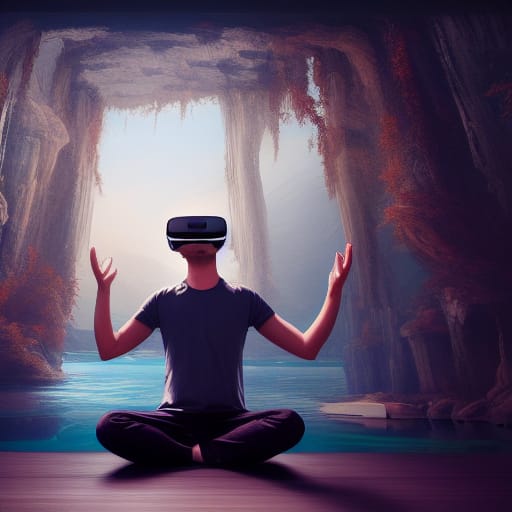
Psychotherapy and VR
This year, virtual reality (VR) is going to be huge.
The virtual world is now so real to your mind and body that you can’t tell the difference.
It’s as though you’re there in person.
Because it allows for a more direct approach to events, virtual reality may be useful to a psychotherapist or psychologist, but it’s too early to determine if it will be helpful.
There are a few instances of VR treatment helping patients with mental problems like phobias and anxiety that you may look at.
To begin, how do we create the world we live in every day?
People, culture, DNA, life experiences, and our need for survival have all shaped who we are.
As a result of this process, we get to know and understand our own unique identity and how it shapes our view of the world.
To allow ourselves to feel the pain of our past.
Changing our perspective and connection to the things that make us unhappy is one of the primary goals of therapy.
We begin by paying attention to the feelings that arise from our experiences.
The urges are not suppressed or fought against; instead, we learn to embrace them as they are.
As a result, we’ll have a little more room to play with.
What if this process could be explored in a safe environment?
Here, virtual reality (VR) comes in.
Virtual reality allows you to create any kind of virtual world you can conceive.
Once you put on the headset, you’ll get the whole authentic experience on all levels: intellectually, physically, and emotionally.
You believe you’re there, but you’re not.
Through the use of gradual exposure treatment, patients have been exposed in a safe and controlled environment to images and sounds associated with their phobias.
Many individuals reported reduced anxiety as a result of overcoming their phobias, whether it was of heights, spiders, or public speaking.
We can transform our connection to our experiences if we practice being present with them, even if they are unpleasant.
To show compassion towards oneself
Practicing self-compassion is a helpful technique to deal with unpleasant situations.
Health and well-being may benefit from its development, although it might be difficult to achieve.
A critical voice may be deafening, especially for those who hear it in their heads constantly.
It’s simple to give our negative sentiments momentum when we treat our inner critic harshly and try to drive it away.
Therapy might help you find your compassionate voice.
Meditations, such as metta bhavana, help cultivate this trait by picturing ways to provide loving kindness to oneself and others..
They seem to be doing something similar in the VR realm.
Compassionate sentiments and words for a weeping virtual kid were solicited from the participants in a virtual environment constructed for that purpose.
As a result, they were able to embody the child’s words and movements in a similar way.
Many of those who participated reported a decrease in depression symptoms after experiencing the compassion they had just given out as a result of this.
If you want to aid compassion, a little empathy will do the trick.
This is where virtual reality (VR) comes in, allowing you to see the world from someone else’s viewpoint.
Empathy may be heightened by putting oneself in the shoes of a refugee, an animal at a butcher, or even a coral in a corrosive environment.
Is virtual reality the wave of the future?
Guided meditations for deep relaxation and virtual surroundings that stimulate drug and alcohol needs to promote relapse prevention are just two examples of the innovative ways VR is being utilized to support mental health.
Those who are unable to leave their homes owing to physical impairments might benefit from a virtual arena where therapists can connect with them.
Given the prevalence of technology among today’s youth, engaging them in conversation about mental health concerns may be a novel approach.
Despite this, there may be a darker aspect to it.
Those who find it difficult to deal with uncomfortable emotions may find refuge in a virtual world, which may serve to reinforce the source of their distress.
And how may our virtual experiences, both good and terrible, influence our everyday lives?
The question is, can the brain and body be fooled into believing they have been subjected to a true trauma?
Because of its ability to provide so much pleasure (easily accessible sex, violence, an escape from reality), these things must be handled cautiously.
What is the future of VR as therapy?
With a little long-term investigation into the possible repercussions of long-term uncontrolled usage, it is one to keep a look out for.
