
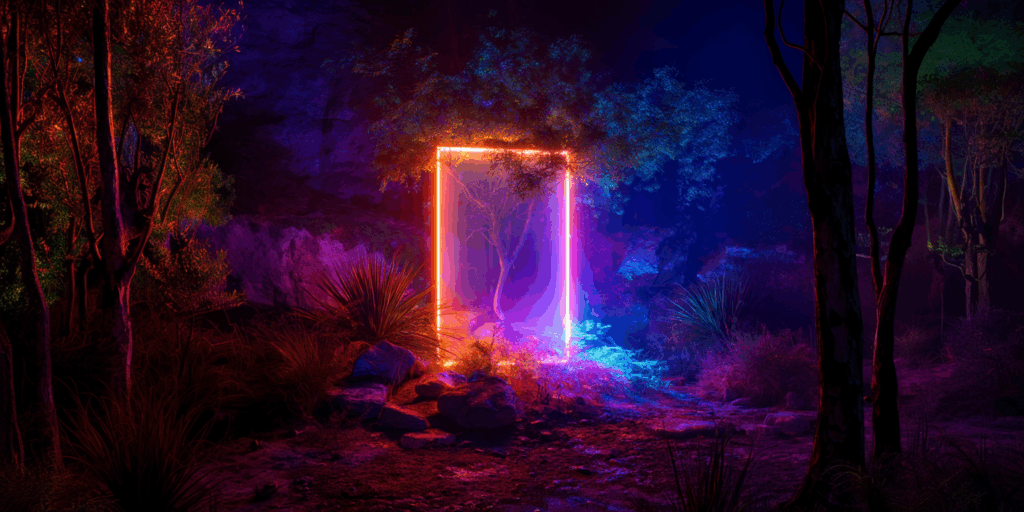
As creators, we aren’t just making things, we’re building bridges between our inner world and someone else’s. We’re sending out signals, hoping they’ll resonate, hoping someone will feel even a fraction of what we felt when we made them. Through writing, painting, music, film, cooking, even the way we choose fabrics for clothing, we’re constantly asking: can you feel this too?
It’s not always obvious. For many, art and media are consumed casually, a song on the radio, a meal on the table, a sweater pulled on in the morning. But underneath those surfaces are layers of intention. Every brushstroke, every note, every detail can carry a message, a memory, an emotion waiting to be unlocked.
I love the idea that a single image can awaken a flood of sensations, not because we created those emotions, but because we stirred them out of someone’s own memories. Think of a commercial showing a ripe, glistening tomato. In an instant, your mind fills in the rest: the soft texture of bread, the sweetness of a thick tomato slice, mozzarella melting gently, basil releasing its aroma, and delicate flakes of sea salt crunching between your teeth. Can you taste it? Even words can do that.
Music does it too. A few chords strummed gently on an acoustic guitar can carry you to a summer evening you thought you’d forgotten, the warm breeze, laughter drifting across a garden, fireflies flickering like tiny stars. Or a heavy, pulsing bassline can awaken something wild: adrenaline rushing, heart racing, as if you’re about to step onto a dance floor lit with neon.
Even fashion carries this quiet power. A thick, soft knit sweater can summon the sensation of sinking into a cozy sofa, cradling your favorite herbal tea, the steam curling gently against your face. A crisp linen shirt might awaken the memory of a breezy spring day, sunlight slipping between the leaves. Leather can evoke strength and confidence; silk can feel like intimacy brushing against your skin. Textures and materials become emotional triggers, weaving stories we didn’t know were still inside us.
As creators, we don’t invent emotions, we awaken them. We coax them from the deep recesses of memory and longing. Sometimes it feels like magic, or even manipulation. But isn’t that what art is meant to do? To move us.
At our core, we are sentimental creatures. We long to feel, to be stirred, to have our emotions stretched to places we can’t fully explain. And as creators, we share that longing. We want others to feel what we feel, to step into the spaces we’ve made and sense our heartbeat there. It’s a delicate, impossible task, because every response depends on the viewer, the listener, the participant.
But maybe that’s the beauty of it, not knowing exactly how our work will live in someone else’s mind, only that it will.
